Egypt
How to return found property safely in Egypt
How to post a found item, verify the real owner and return a phone, passport, keys, wallet or valuable safely in Egypt without exposing private data.
Short answer
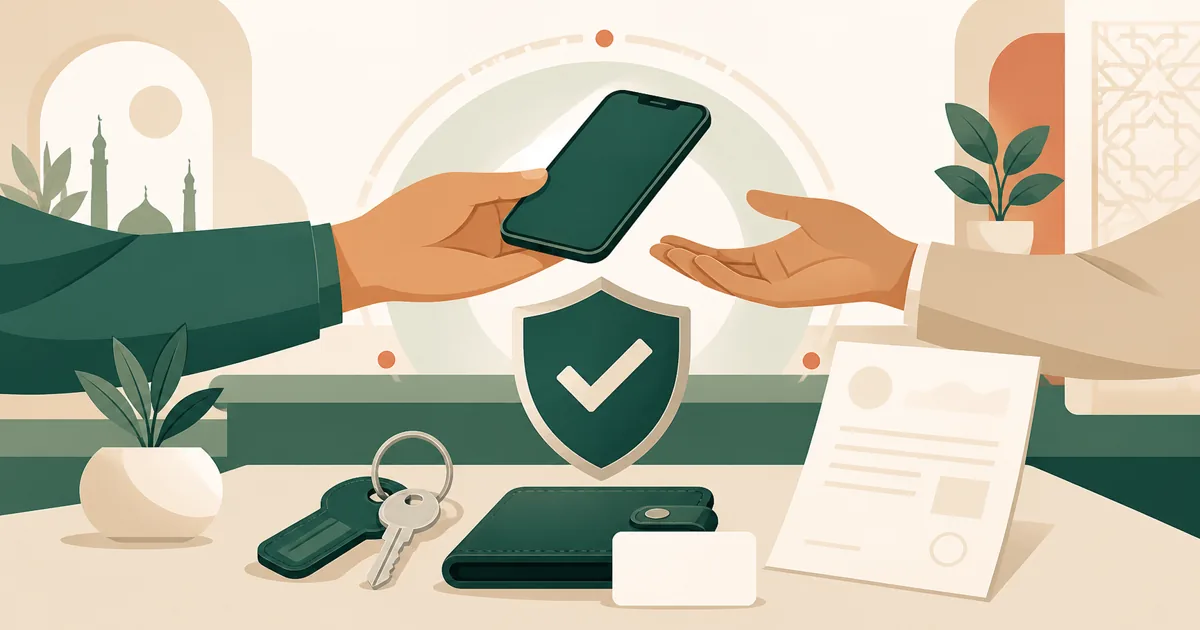
If you find someone else’s property, do not publish every detail that could let an impostor claim it. Share the category, approximate place and date, while keeping unique characteristics private so the real owner can prove possession.
Use a public place, hotel/building security or an official channel for the handover when the item is sensitive, valuable or linked to identity documents. Never ask for or send passwords, one-time codes, banking credentials or advance payment just to “release” an item.
Open Lost & Found in HurghadaSearch current posts or create your own on Marketplace
What not to publish
Do not post publicly:
- a full passport or ID number;
- an unredacted document photo;
- a full bank-card number;
- a home address taken from an ID;
- a full IMEI or serial number;
- a phone unlock code;
- every item inside a wallet or bag;
- all unique scratches, stickers or details that should be used to prove ownership;
- sensitive personal information about a child or another person unless it is necessary for safe identification.
A good post deliberately keeps some proof details private.
How to write a useful found-item post
Usually include:
- the general type of item: phone, keys, wallet, bag, document, jewellery;
- the city and approximate area;
- the approximate date and time;
- a safe contact method;
- a note that the claimant must describe additional details.
Instead of publishing every characteristic of a phone, say that a smartphone was found in a certain area and ask the claimant to identify the model, case and hidden distinguishing details.
How to verify a claimant
Ask the claimant to describe something that was not published:
- exact model or colour;
- a hidden mark, sticker or scratch;
- contents of a pocket or wallet;
- wallpaper or phone case;
- a serial-number fragment known to the owner;
- receipt, box or purchase evidence for expensive electronics;
- the number and purpose of keys on a key ring.
Do not collect excessive personal data when simpler proof is enough.
Safe handover
For an ordinary item:
- agree a time;
- choose a busy public place;
- bring another person if appropriate;
- verify hidden details first;
- hand over the item only after verification;
- for a valuable item, you may keep a simple handover record without copying unnecessary identity documents.
Do not get into a stranger’s car or enter their home solely to return an item.
If the item was found in a hotel, compound, airport, mall or another managed property, check the venue’s official lost-and-found procedure.
Phones, tablets and laptops
If you find a phone or computer:
- do not try to access private content;
- do not ask the owner for the password or PIN;
- do not publish the full IMEI/serial number;
- keep the device charged where safe and practical;
- ownership can be proven through the case, wallpaper, model, a serial fragment or the device-locator function;
- never enter account passwords or verification codes sent by a stranger.
If someone sends a link claiming you must “verify” an Apple or Google account, do not enter credentials.
Wallets and bank cards
Do not publish photos of cards or identity documents from a wallet.
Ask a claimant to describe contents without sending a full card number. If a bank card is found and the owner cannot be identified safely, follow the issuer bank’s instructions or use an appropriate official channel depending on the circumstances.
Never use a found card to “test” whether it works.
Keys
Do not post a photo of keys together with an exact home, apartment or vehicle location.
Ask the claimant to identify:
- number of keys;
- type of key ring;
- purpose of specific keys;
- other items attached to the ring.
If keys are found with a document that shows a home address, do not publish that address.
Passports, IDs and residence documents
Identity documents require extra care.
Do not publish:
- the passport data page;
- full document number;
- date of birth together with document number;
- address;
- personal identification number;
- visa/stamp photos that expose unnecessary personal details.
For a found passport or other official document, safer options may include the management/security of the place where it was found, police/tourist police or the relevant consulate, depending on the circumstances.
If you lost your own passport, record where and when it was lost and follow current guidance from your diplomatic mission and Egyptian authorities. Operating hours and procedures should always be rechecked before travel to an office.
When to contact police or Tourist Police
Current official Egyptian sources list:
- Police: 122;
- Tourist Police: 126.
The Ministry of Interior publishes 122. Experience Egypt, the official tourism portal, publishes Tourist Police 126.
Emergency services are not necessary for every low-value found item. Official help is more appropriate when:
- a passport, ID or another sensitive document is involved;
- the item is valuable and a safe handover is difficult;
- theft, fraud or another crime is suspected;
- someone threatens you or demands money/data;
- the item appears dangerous or suspicious;
- the circumstances require an official record.
For an immediate safety threat, use the appropriate official emergency channel rather than continuing a marketplace chat.
Do not pay for “unlocking”, delivery or proof of ownership
A common risk is a request for advance payment for “courier”, “storage”, “delivery”, “unlocking” or “verification”.
Never send:
- OTPs;
- online-banking passwords;
- card credentials;
- SMS verification codes;
- Apple ID/Google passwords;
- crypto wallet seed phrases.
If someone claims to hold your item, first ask for safe proof such as a redacted photo or a unique detail without exposing sensitive information.
Rewards
A reward can be voluntary, but it should not become a pre-payment condition for “releasing” an item.
Do not transfer a large amount to an unknown person solely because they claim to have found your phone. First establish that they actually have it and arrange a safe handover.
Checklist for the finder
[ ] I did not publish sensitive information
[ ] I kept hidden details for owner verification
[ ] I used an approximate, not excessively precise, location
[ ] I verified the claimant using hidden details
[ ] I did not ask for passwords, OTPs or banking data
[ ] I chose a public handover location
[ ] I considered an official handover for documents/valuables
[ ] I do not follow links sent for “account verification”
Checklist for the owner
[ ] I describe unique details that were not in the post
[ ] I do not send passwords or verification codes
[ ] I do not transfer money before the find is proven
[ ] I meet in a safe public place
[ ] For a bank card, I contact the issuer
[ ] For passport/ID, I check the official procedure
[ ] For threats or extortion, I use official channels
Find or post an item through Nabiora
For Hurghada, use the Marketplace Lost & Found section to search current posts or create your own. Community explains the safe process; Marketplace handles discovery and posting.
Open Lost & Found in HurghadaGo to Marketplace search and posting
Frequently asked questions
Should I post a photo of the found item?
You can when the image does not expose all ownership proof or private data. Full passport and bank-card photos should not be published.
How can I prove a phone is mine without giving the password?
Describe the model, case, wallpaper, a hidden mark, a serial fragment or use the device-locator function. You should not need to give a PIN or account password.
What if the finder demands money before meeting?
First get evidence that they actually hold the item. Do not send passwords, codes or banking data. If the behaviour looks fraudulent or threatening, stop contact and use an official channel.
Where should a found passport be handed in?
It depends on the place and circumstances: venue management/security, police/tourist police or the relevant consulate may be appropriate. Do not publish the full passport online.
Disclaimer
This is practical safety and privacy guidance, not legal advice. Procedures for official documents or government reporting may depend on the facts and may change.
Sources and verification date
- Egypt Ministry of Interior — Police 122: https://moi.gov.eg/Default.aspx
- Experience Egypt — Tourist Police 126 and useful numbers: https://www.experienceegypt.eg/en/usefulinfo
- Last source verification: 23 August 2026.
Check current conditions at the original source before acting.
Official sources
Still have a question about this guide?
Describe your situation — the category is already selected. Answers come from community members, so use the official details cited in the guide for important decisions.